A crypto on-ramp is the route that helps you move from traditional money into cryptocurrency. In Nigeria, that usually means paying Naira and receiving a supported crypto asset such as USDT or USDC in your own wallet.
For someone buying stablecoins, the important question is not only whether a platform lists USDT or USDC. You also need to understand the payment route, supported network, destination wallet, displayed quote and confirmation event. Muno supports a Naira-to-crypto buying route for Nigerians: you pay through a one-time virtual account, and your purchased USDT or USDC is delivered to your own wallet after payment confirmation.
What is a crypto on-ramp?
A crypto on-ramp is a service or process that helps a person enter the crypto market using local or traditional currency.
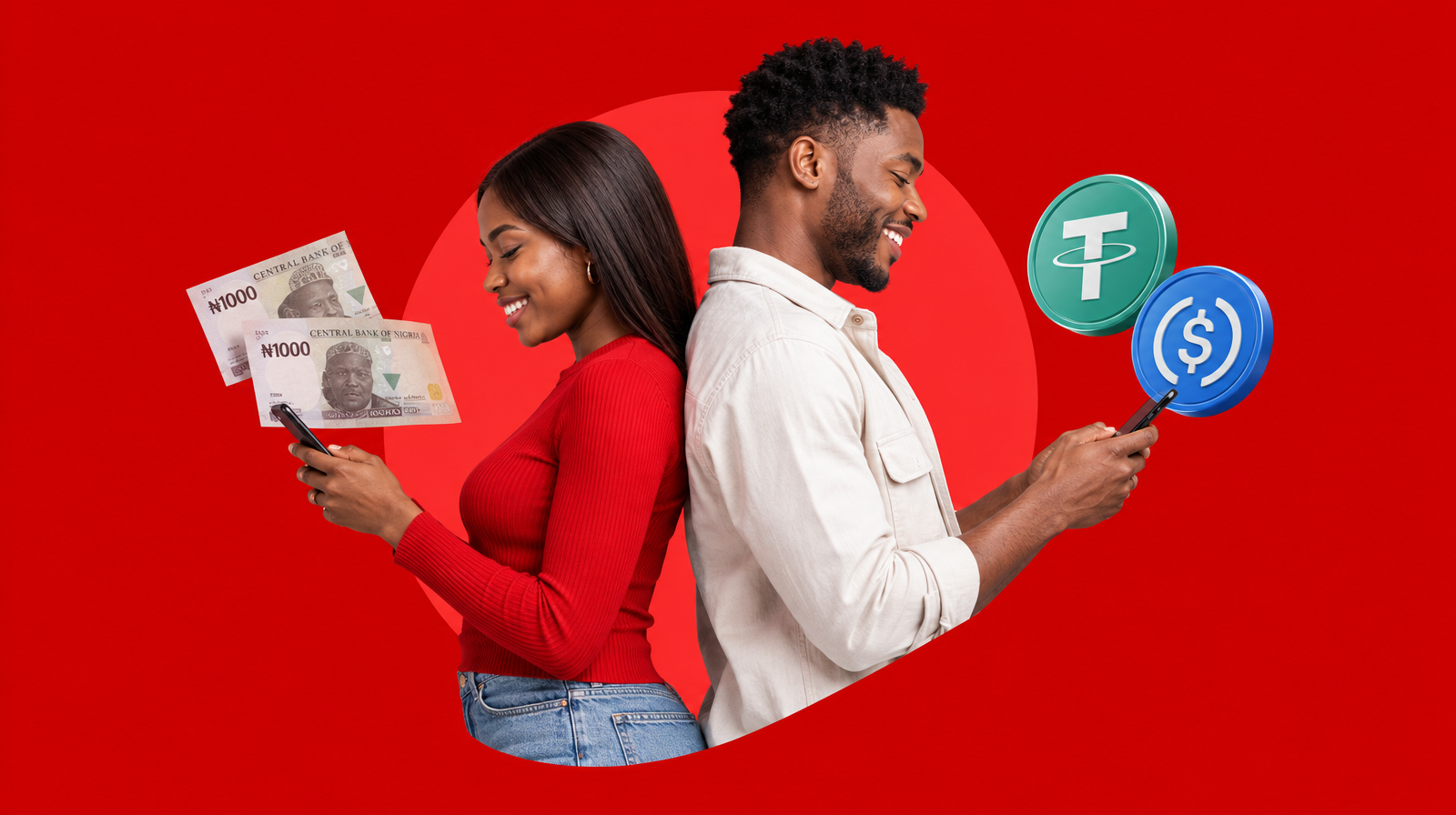
In this article, the starting point is Naira and the destination is USDT or USDC. You are not sending crypto to receive Naira. Instead, you are paying Naira and receiving crypto in a wallet that you provide.
The basic direction is:
Naira → USDT or USDC → your wallet
The on-ramp may include several parts:
- Selecting the crypto asset you want to buy.
- Providing the destination wallet.
- Reviewing the available quote and fees.
- Following the payment instructions.
- Waiting for payment confirmation.
- Receiving the purchased asset in the specified wallet.
The term describes the direction of the transaction, not a promise about the asset’s value, transaction speed or investment outcome. USDT and USDC are stablecoins, but you should still confirm the exact asset and network before paying.
How is an on-ramp different from an off-ramp?
An on-ramp takes you into crypto. An off-ramp takes you out of crypto and back into local currency.
| Route | You start with | You receive |
|---|---|---|
| Crypto on-ramp | Naira | USDT or USDC in your wallet |
| Crypto off-ramp | USDT or USDC in your wallet | Naira in your bank |
For example, if you have Naira and want USDC for a wallet you control, you are looking for an on-ramp. If you already hold USDC and want a Naira payout to your bank, you are looking for an off-ramp.
Muno supports both buying and selling USDT and USDC with Naira in Nigeria. However, the two routes should not be treated as the same transaction:
- Buying requires payment instructions and a destination wallet.
- Selling requires sending supported crypto to the deposit address generated for that swap.
- Buying is completed after payment confirmation.
- Selling is completed after network confirmation, followed by the Naira payout to your bank.
If you want to understand the reverse direction in more detail, read What Is a Crypto Off-Ramp in Nigeria? USDT and USDC Explained.
Can you buy USDT with Naira in Nigeria?
Yes. Muno’s buying route allows Nigerian customers to pay Naira for supported USDT and receive the purchased crypto in their own wallet after payment confirmation.
The buying process can be understood as four stages.
1. Choose the asset you want to receive
Start by selecting USDT if that is the asset you need. Do not assume that choosing a stablecoin name is enough. Confirm the asset shown in the current purchase details.
Muno supports USDT and USDC as SPL tokens on the Solana network. That means the wallet receiving the purchase must support the relevant Solana-based token.
2. Add the destination wallet
The destination wallet is where the purchased USDT will be delivered. It should be a wallet you control and one that supports the selected asset on the supported network.
Check the wallet address carefully before continuing. A wallet can support crypto generally while still not supporting the specific asset or network selected for a transaction.
For a practical preparation guide, see How to Check Your Wallet Before Buying USDT With Naira.
3. Review the payment instructions
Muno’s website describes the buying route as using a one-time virtual account rather than paying an individual P2P seller. Follow the payment details displayed for the current purchase rather than relying on an old account number, saved instruction or message from another transaction.
A one-time payment route makes it especially important to use the exact instructions shown for the purchase you are currently completing.
4. Pay and wait for confirmation
After you transfer the requested Naira, the payment must be confirmed. Muno then delivers the purchased USDT to the destination wallet provided for the transaction.
The wallet delivery is the defining outcome of the on-ramp: your Naira goes in through the payment route, and the crypto goes to your own wallet after payment confirmation.
Can you buy USDC with Naira in Nigeria?
Yes. The same general on-ramp concept applies when buying USDC with Naira.
The direction is:
Naira → USDC on Solana → your receiving wallet
Before paying, check that:
- You selected USDC, not USDT.
- The selected network is Solana.
- Your receiving wallet supports USDC as an SPL token.
- The destination address belongs to your own wallet.
- The current quote and fees are clear.
- The payment instructions match the current purchase.
The difference between buying USDT and buying USDC is the selected asset. The operational checks remain important for both. A correct wallet address on the wrong network, or the wrong token sent to a wallet, does not become correct simply because the asset names are familiar.
You can learn more about the terminology in What Does SPL Mean for USDT and USDC Swaps in Nigeria?.
Why the asset and network must match
Crypto transactions depend on more than the token’s ticker symbol. The asset and the network work together.
USDT can exist on multiple blockchain networks, and USDC can also exist on multiple networks. In Muno’s supported buying route, the relevant version is USDT or USDC as an SPL token on Solana.
Before you confirm, ask two separate questions:
-
Which asset am I buying?
USDT and USDC are different assets, even though both are stablecoins. -
Which network is being used?
Muno’s website identifies Solana and SPL support for these assets.
Your wallet must support both answers. For instance, it is not enough for a wallet to support USDC in general if it does not support the Solana-based version selected for the purchase.
A useful mental model is to treat the asset and network as one complete delivery instruction:
USDC on Solana, not just USDC.
That check should happen before you transfer Naira.
What should you check before paying for a crypto purchase?
Use this checklist before confirming an on-ramp transaction in Nigeria.
Purchase checklist
- Starting currency: Are you paying Naira?
- Selected asset: Did you choose USDT or USDC as intended?
- Network: Does the transaction specify Solana?
- Token format: Is the asset supported as an SPL token?
- Destination wallet: Does the wallet belong to you?
- Wallet compatibility: Can it receive the selected asset on Solana?
- Wallet address: Have you checked every character and destination?
- Quote: Is the expected amount of crypto clearly shown?
- Fees: Are the applicable fees displayed before confirmation?
- Payment route: Are you using the current one-time virtual account details?
- Confirmation event: Do you understand that delivery follows payment confirmation?
This checklist is deliberately more specific than simply asking whether a platform “supports USDT.” Support should be evaluated as a complete route: the currency you send, the asset you receive, the network used and the wallet that receives it.
What does a crypto on-ramp cost?
The cost of an on-ramp transaction depends on the quote and fees shown for the purchase. Do not judge the transaction from a headline rate alone.
Before paying through Muno, review the current transaction details and any itemised fees shown before confirmation. The displayed information is what allows you to understand what you are paying and what you expect to receive.
A useful comparison is the final outcome:
- How much Naira will you send?
- Which asset will you receive?
- Which network will carry it?
- Which fees are included?
- Which wallet will receive the crypto?
If any of those details are unclear, pause before transferring money.
For broader criteria when comparing services, read How to Choose a Crypto-to-Naira Platform in Nigeria.
How Muno supports the buying route
Muno is a technology platform for converting crypto to cash and supports Nigerians buying and selling USDT and USDC with Naira.
For the buying route specifically, Muno provides:
- A Naira payment route using a one-time virtual account.
- Support for buying USDT or USDC.
- Support for these assets as SPL tokens on Solana.
- Delivery of purchased crypto to the customer’s own wallet after payment confirmation.
- Swap details and fees shown before confirmation.
The route is non-custodial in the sense that Muno does not maintain a customer crypto balance for the buying process. The purchased asset is directed to the wallet supplied for the transaction rather than being presented as a balance held for you on Muno.
That makes the destination-wallet check particularly important. You should know where the asset is going before you make the Naira payment.
On-ramp or off-ramp: which route do you need?
The simplest way to choose is to identify what you currently hold and what you want next.
Choose an on-ramp if:
- You currently have Naira.
- You want to buy USDT or USDC.
- You want the crypto delivered to your own wallet.
- You are ready to check the asset, network and payment instructions.
Choose an off-ramp if:
- You already hold supported USDT or USDC.
- You want to convert it to Naira.
- You want the Naira paid to your bank.
- You are ready to send the crypto after reviewing the quote and deposit instructions.
In short:
Naira in and crypto to your wallet: on-ramp.
Crypto out and Naira to your bank: off-ramp.
Final takeaway
A crypto on-ramp in Nigeria is the route from Naira into crypto. When you buy USDT or USDC, you pay Naira through the provided payment route and receive the selected crypto in your own wallet after payment confirmation.
With Muno, the buying route uses a one-time virtual account, supports USDT and USDC as SPL tokens on Solana, and delivers the purchased asset to your wallet. Before paying, confirm the selected asset, Solana network, receiving-wallet compatibility, destination address, quote, fees and current payment instructions.
If you already hold USDT or USDC and need Naira in your bank, you need the opposite route: a crypto off-ramp.
Visit Muno.ng to explore the relevant buying or selling route for USDT and USDC with Naira in Nigeria.